Art and Dance
The first of two events in the series focused on art and dance as expressions of creativity, identity, and heritage. The community at large was invited to spend the day exploring Indigenous art and Pow Wow dance together, with a large portion of participants being children eager to learn and take part. Elders were also invited from the different communities to share the history, importance, and traditions surrounding dance and art, offering firsthand knowledge that grounded the day’s activities in lived cultural experience rather than surface-level exposure. Their presence transformed the event from a simple showcase into an intergenerational exchange, giving younger participants the opportunity to learn directly from those who carry this knowledge forward.
The conversations with community Elders provided much clarity, both on the types of art pieces the community would like to see represented and preserved, and on the protocols required to properly bring Pow Wow dances to children in a way that honours tradition. These discussions underscored that art and dance are not simply forms of entertainment or display, but living practices carrying deep cultural, spiritual, and educational significance—ones that must be introduced and taught with the appropriate care, respect, and guidance of those who hold that knowledge. The event laid an important foundation for the sessions that followed, reinforcing the importance of Elder-led teaching as a core part of how cultural knowledge is shared and sustained within the community.
Art and dance are not simply forms of entertainment or display, but living practices carrying deep cultural, spiritual, and educational significance.
Symposium July–August
Our communities have always lived in relationship with the seasons, relying on the ebb and flow of what the earth provides. Like the salmon runs, some years bring an abundance that allows communities to gather and celebrate together, while other years bring barely a trickle. Our symposium reflected this same rhythm. Rather than forcing engagement into a fixed moment, we allowed it to arrive as it naturally would.
Across the season
- Nature walks
- Energy teachings
- Smudging and prayer
- River cleansing
Offered in school and childcare programs and at community events.
Our work is grounded in a heritage-based, culturally sensitive approach. While we appreciate the value of a structured festival format, we also recognize the fluid and cyclical nature of the Indigenous communities we walk alongside. Rather than asking community members to gather on fixed dates, we invited them to spend the season with us. We continued to strive toward a structured symposium wherever possible, but the event ultimately came together as an integrated experience woven into the life of the community. As a result, what was planned as a single-day symposium grew into broader, ongoing community engagement. This included nature walks, energy teachings, smudging and prayer, and river cleansing offered across a range of settings such as school and childcare programs and community events.
By taking a culturally appropriate approach, we were able to honour diverse expressions of identity, heritage, language, and lived experience across different communities. This created space for traditional values around anti-racism and reconciliation to be shared in ways that felt authentic and meaningful. Participants were able to live their cultural truths in relation to reconciliation, rather than engage with it only as a concept. Because the symposium moved through the community instead of being held in one place, its impact reached across generations, from children in childcare programs to Elders and knowledge keepers. Conversations throughout the season made it clear that a non-linear, culturally sensitive approach must be represented and preserved when celebrating and embracing anti-racism and reconciliation in our communities.
Ultimately, the more fluid structure of our symposium did more than fit the communities we serve. It challenged colonial narratives and structural systems, modelled the kind of institutional and systemic change that true reconciliation requires, and supported full participation in reconciliation and multiculturalism. Most importantly, it created equitable, non-discriminatory opportunities for people to connect, learn, and heal together.
Tool Making
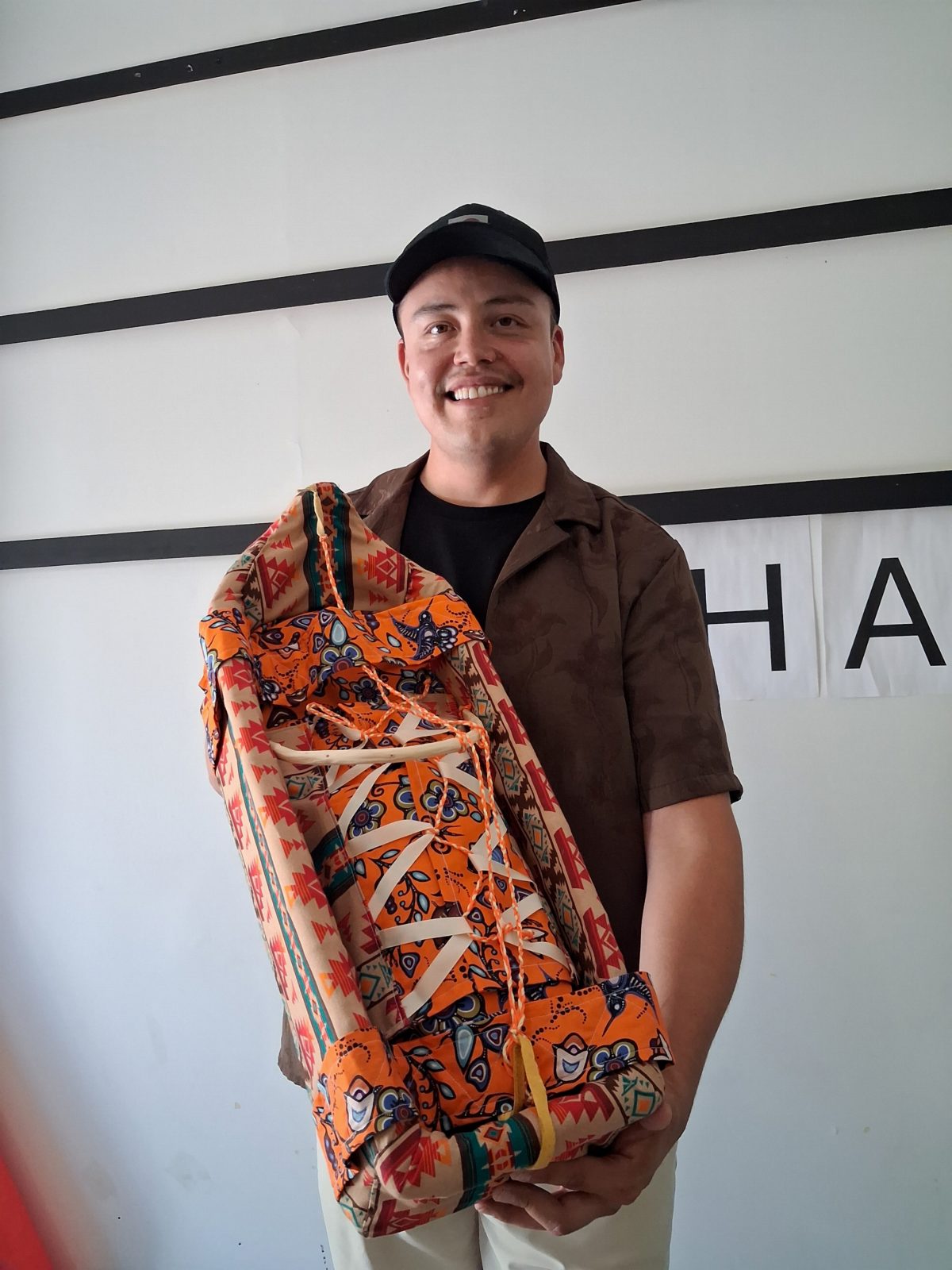
The second event in the series focused on tool-making skills handed down through family lines, centering on two crafts that hold deep importance to the Tsilhqot’in and Southern Dakelh communities: dip net making and baby basket weaving. With the Fraser River central to both Tsilhqot’in and Southern Dakelh territories, the making and use of dip nets as a traditional fishing practice continues to be passed from one generation to the next, carrying with it not just practical knowledge but a lasting connection to the land, the salmon, and community identity.
Baby basket weaving holds a similarly rich history, with techniques learned and passed down from generation to generation, carrying with them teachings of patience and the artistry of the communities that make them. Together, both practices represent a living connection between generations, one that continues to keep the rich cultures of the Dakelh and Tsilhqot’in peoples alive.
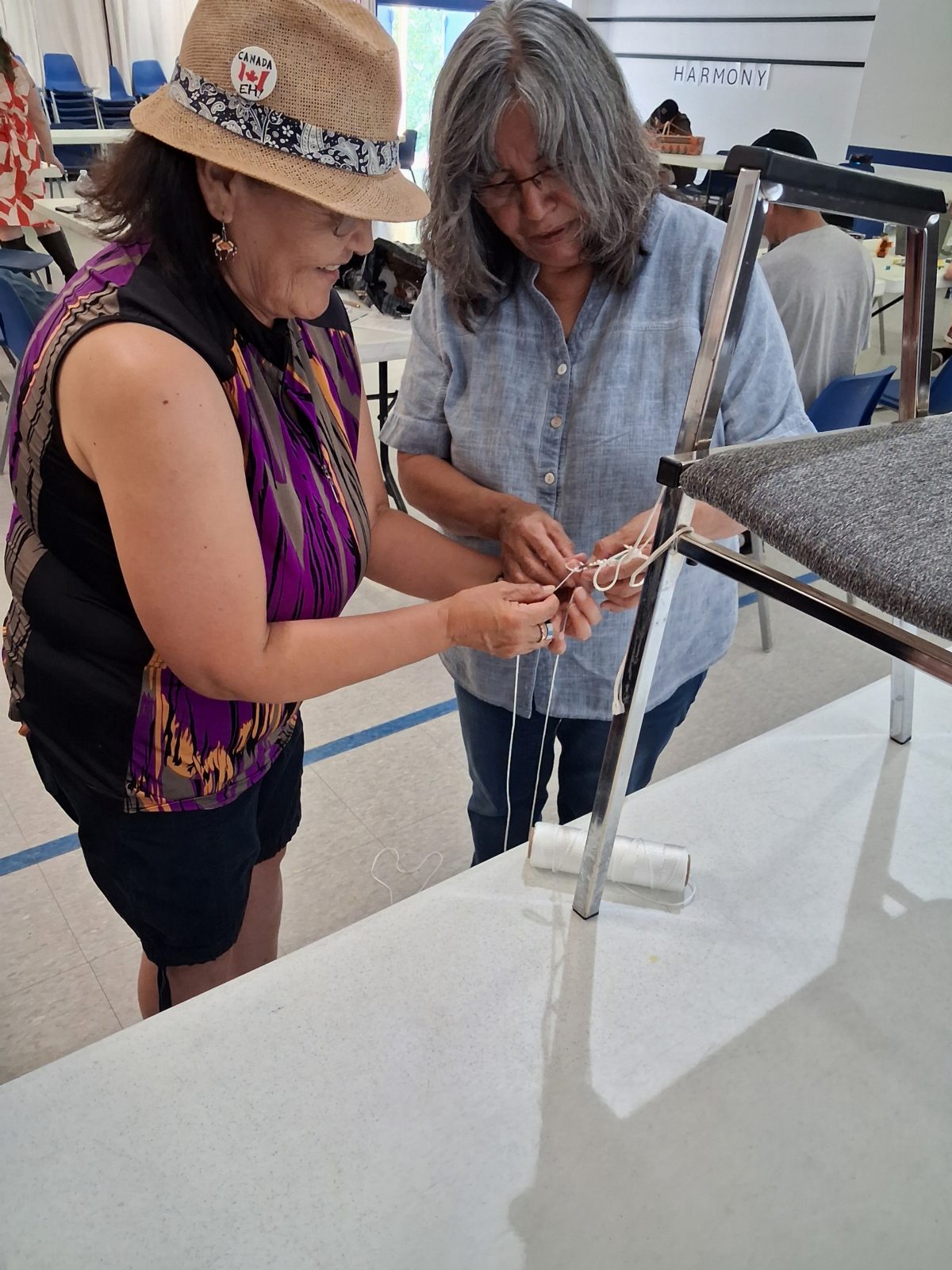
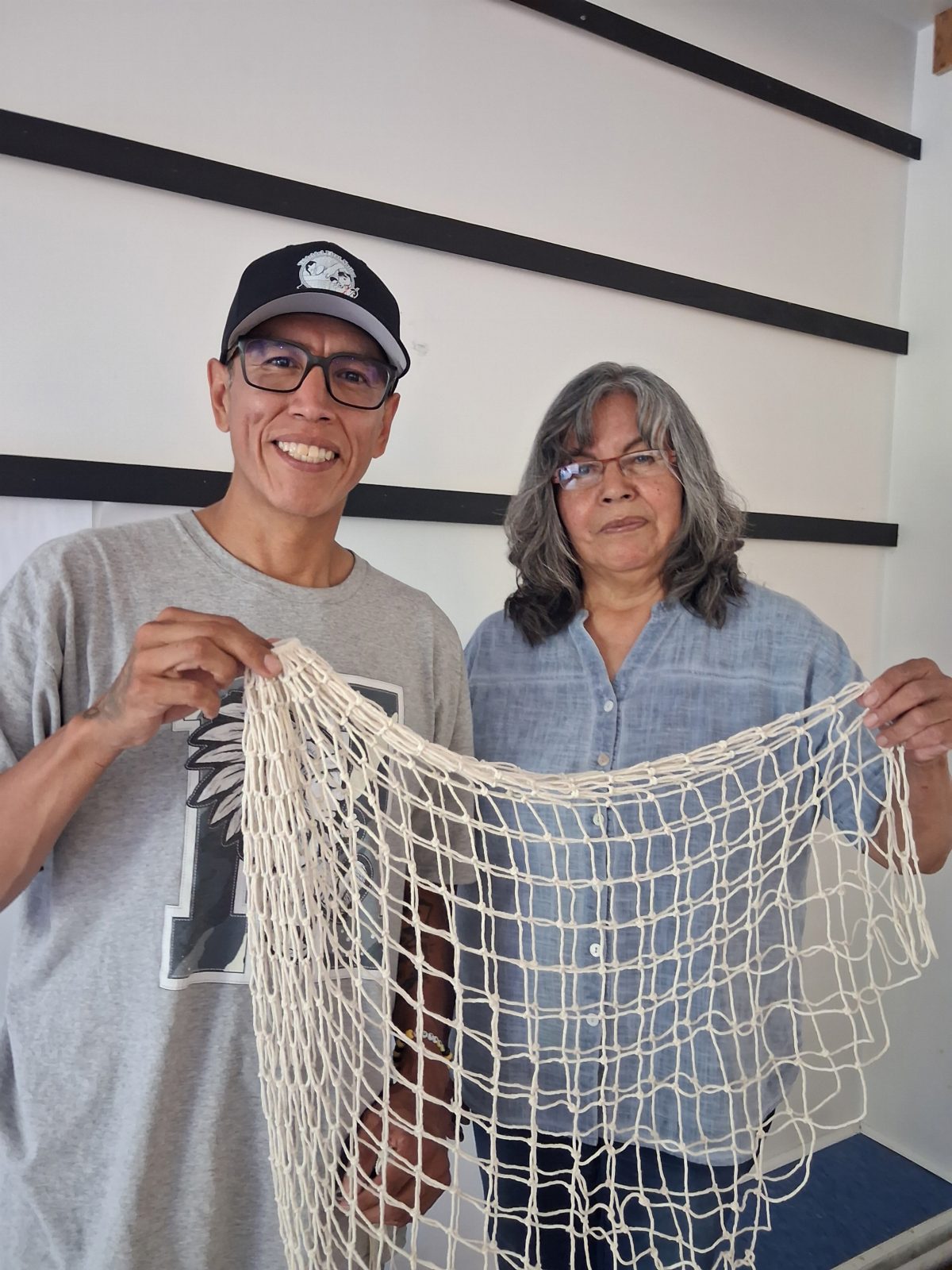
Dip nets and baby baskets
Skills handed down through family lines